Manufacturer of liquid fertilisers & biostimulants
containing the unique TS NanoBlend© technology
enquiries@swagronomy.com
Talk to us on: 07900 692052

enquiries@swagronomy.com
Office: 01822 369005
Mobile: 07900 692052


PAR+ Indoors
INCREASES EFFICIENCY of PHOTOSYNTHESIS FOR HIGH QUALITY INDOOR PLANTS
How PAR+ Works
PAR+ is made from a compound that is at the start of the metabolic reaction chain that produces both chlorophyll and antioxidants. Using PAR+ results on plants results in greener, stronger foliage with enhanced resilience to oxidative stress caused by the harsh environment (for indoor plants) found in most homes
Proven through Research at the World Renowned University of Nottingham, Sutton Bonington plant research centre.
WHY CHOOSE PAR+?


Enhances Chlorophyll Production
Drives more energy capture for denser,greener turf
Improves Stress Tolerance
Supports turf during intense sunlight, shade, heat, cold, drought and salinity pressures.c
Boosts Energy Flow
Increases metabolic activity and nutrient uptake
Proven At a UK University
PhD level studies verify the effects of PAR+

The above chart shows the effects of PAR+ on the Electron Transfer Rate (ETR), the speed of photosynthesis. PAR+ increases photosynthesis at every light level.
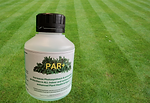
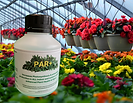
PAR+ is supplied as a liquid
formulation in 250ml bottles





The above chart shows the effects of PAR+ on the efficiency of photosynthesis, which decreases naturally the brighter the light. PAR+ increases the efficiency of photosynthesis at every light level.
APPLICATION GUIDELINES
Use the supplied pipette to dilute the correct amount of PAR+.
Stress Level Dilution Frequency
Before stress occurs 2-4ml per Spray on foliage every
litre water 2-3 weeks
Moderate stress 4-6ml per Spray on foliage every
litre water 3-4 weeks
Severe stress 6-8ml per Spray on foliage every
litre water 4-6 weeks
The above dilution and applications rates are a guide only. Users will need to trial and find the 'sweetspot' for their plants in the growing conditions provided.
Considerations for Optimizing PAR+
-
Application Frequency: Lower concentrations (2-4ml per litre water) can be applied more frequently, while higher concentrations (6-8ml per litre) should be used less often to prevent over-stimulation.
-
Environmental Factors: In warmer environments or during active growth phases, slightly higher concentrations (4-6ml per litre) may be needed, while cooler climates may benefit from lower rates (2-4ml per litre water).
-
Plant Species: Some plant species may have different tolerances to PAR+ due to differences in growth rates and stress tolerance.